
Tennis Bracelet 101: How to Pick Yours
The tennis bracelet has a name because Chris Evert lost hers during the 1987 US Open. She stopped the match. The umpire paused play until she foundt.
The story made the bracelet famous. The reason it stayed famous is simpler. It is one of the few pieces of fine jewelry that works at the gym, at a board meeting, at a wedding, and at the beach. Most pieces are designed for one occasion. The tennis bracelet was designed for the occasion of being alive.
If you are buying your first one, or upgrading from one you already own, here are the five things our gemologists check.
1. Carat weight, total
The first number to ask is the total carat weight (TCW). This is the sum of all the diamonds in the bracelet, not the size of any single stone.
A useful range:
- Under 3 ctw: delicate, layers well with watches, reads as everyday
- 3 to 6 ctw: classic. Visible across a room, still subtle on the wrist
- 6 to 12 ctw: statement. Reads as the only piece you need
- 12+ ctw: collector grade. Photographs in a way smaller bracelets cannot
There is no right answer. The right answer is what you will wear. A 2 ctw bracelet you wear every day matters more than a 12 ctw bracelet that lives in a safe.

2. Prong type
The way each diamond is held determines how the bracelet feels and how secure it is.
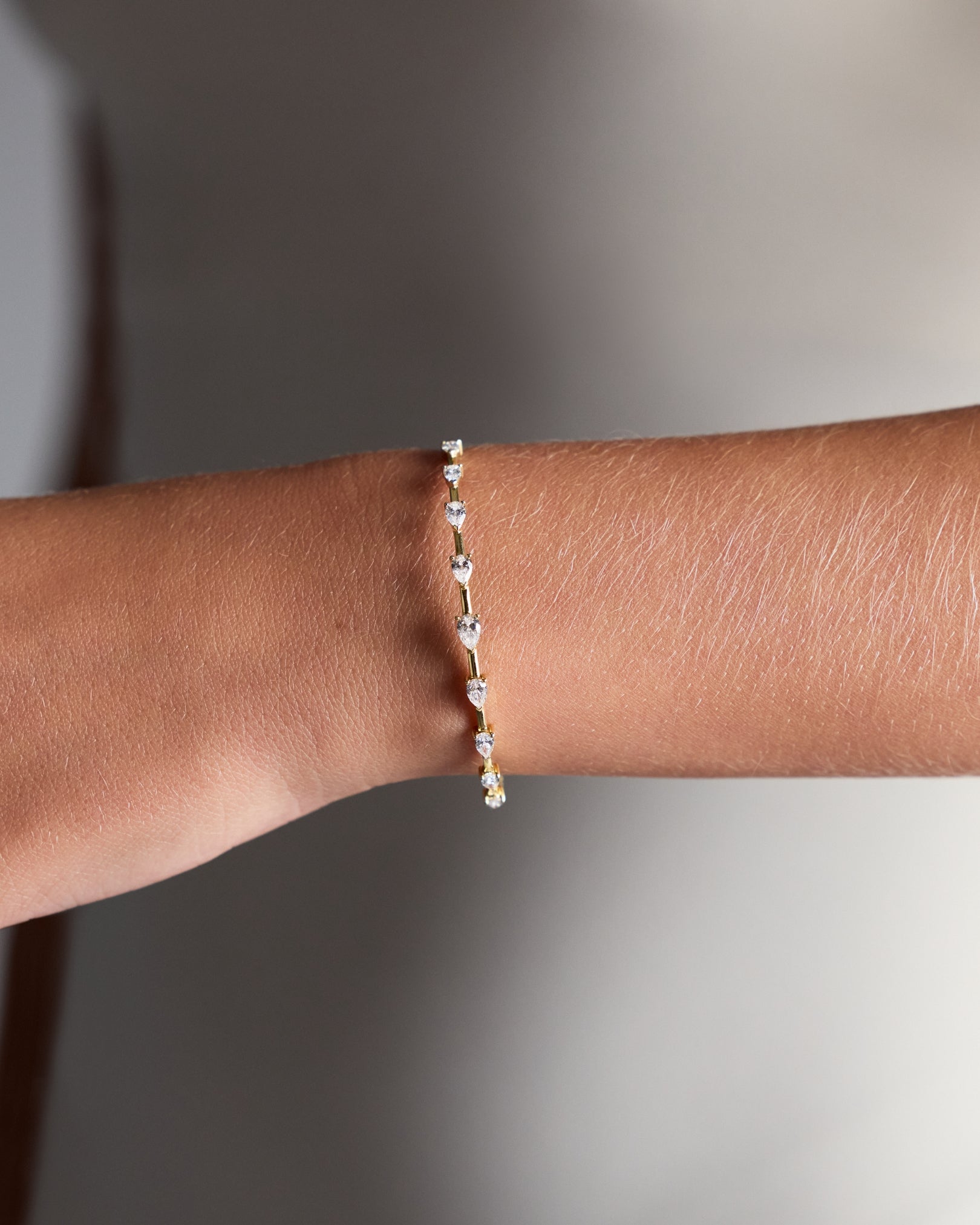
- Four-prong: the most common. Each diamond held by four small claws. Maximum sparkle, slight catch on fabric.
- Bezel: each diamond fully surrounded by metal. Sleeker, less sparkle but more secure. Better for active wearers.
- Half-bezel: middle ground. Two prongs plus partial bezel. Catches less than full prong, sparkles more than full bezel.
- Channel: diamonds set inside a metal channel, no prongs. Lowest profile, lowest sparkle, almost zero risk of snagging.
If you wear bracelets daily and tend to forget you have them on, bezel or channel. If you take it on and off for occasions, four-prong.

3. Clasp
The clasp is the part of the bracelet most likely to fail. It is also the part most jewelers will not talk about.
A good tennis bracelet has:
- A box clasp with a safety: the main locking mechanism plus a secondary chain or figure-eight catch
- Smooth action: opens and closes with one hand, ideally without looking
- Reinforced join: the spot where the clasp meets the diamond row should be soldered, not riveted
If a jeweler hesitates when you ask about the clasp, that is your answer. Walk out.
4. Length
Standard tennis bracelet length is 7 inches. The right length for your wrist is usually 7.0 to 7.25 inches.
Quick rule:
- Wrist measures under 6.0 inches: order 6.5 to 6.75
- Wrist measures 6.0 to 6.5: order 7.0
- Wrist measures over 6.5: order 7.25 or 7.5
A bracelet that is too long swings around your wrist and catches on cuffs. A bracelet that is too short pinches and dents. Both are uncomfortable and both make you stop wearing it.
If you are buying online, measure your wrist with a soft tape and add 0.5 inches. That is your length.
5. The metal
For tennis bracelets, the choice is usually between 14K and 18K gold (yellow, white, or rose). Platinum is also an option for higher-end pieces.

- 14K gold: harder, more durable, slightly less yellow color. Better for daily wear.
- 18K gold: richer color, slightly softer. Better for occasion wear and for buyers who want the warmth.
- Platinum: heavier, hypoallergenic, shows scratches more visibly but never tarnishes.
A useful rule: if you wear your tennis bracelet every day, 14K. If you wear it for special occasions and want the richer look in photos, 18K.
The JJ tennis bracelet edit
These are the five our gemologists pick most often. Across price points, across stones, across daily-wear vs occasion-wear.
How to layer a tennis bracelet
The tennis bracelet works alone. It also works in a stack.
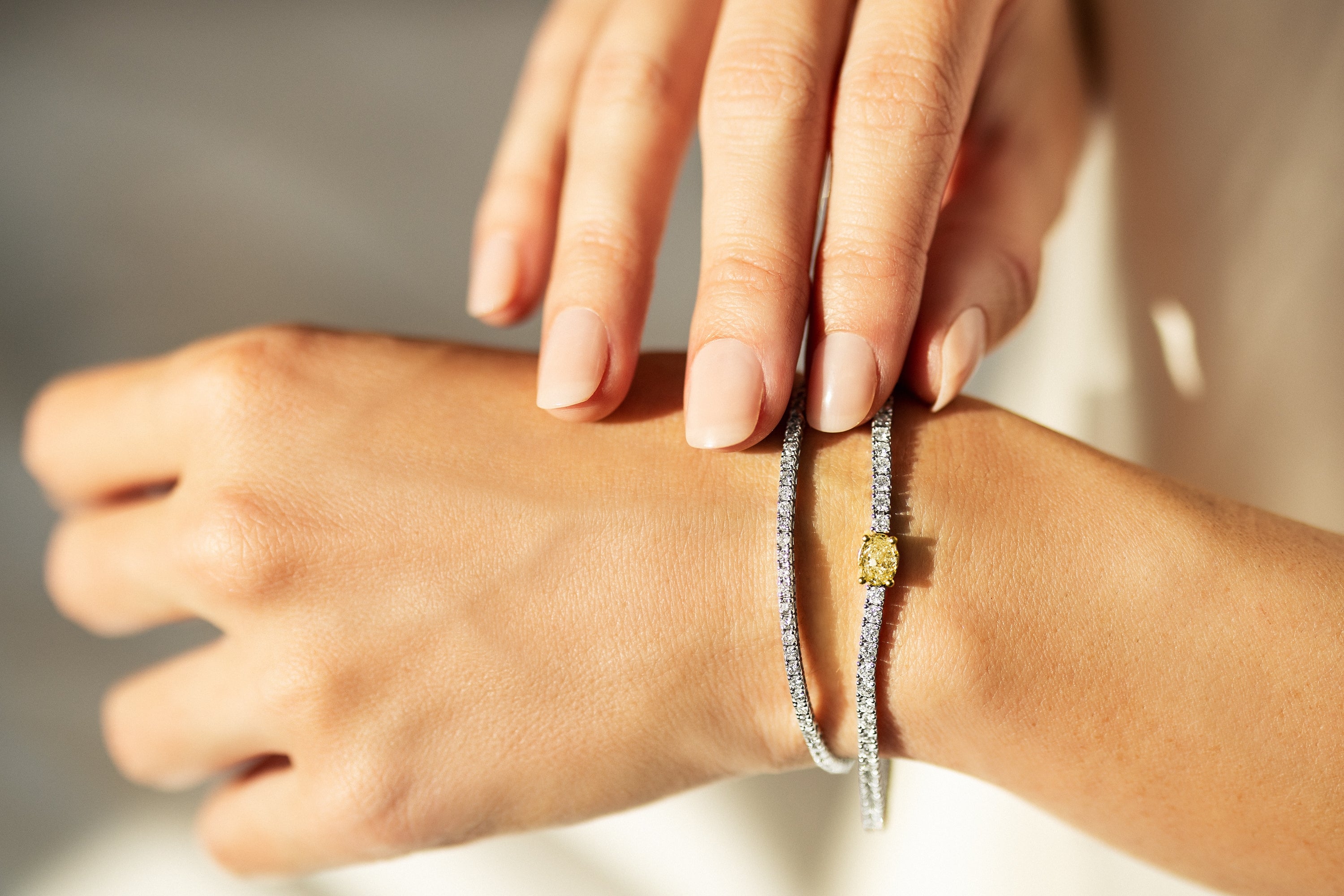
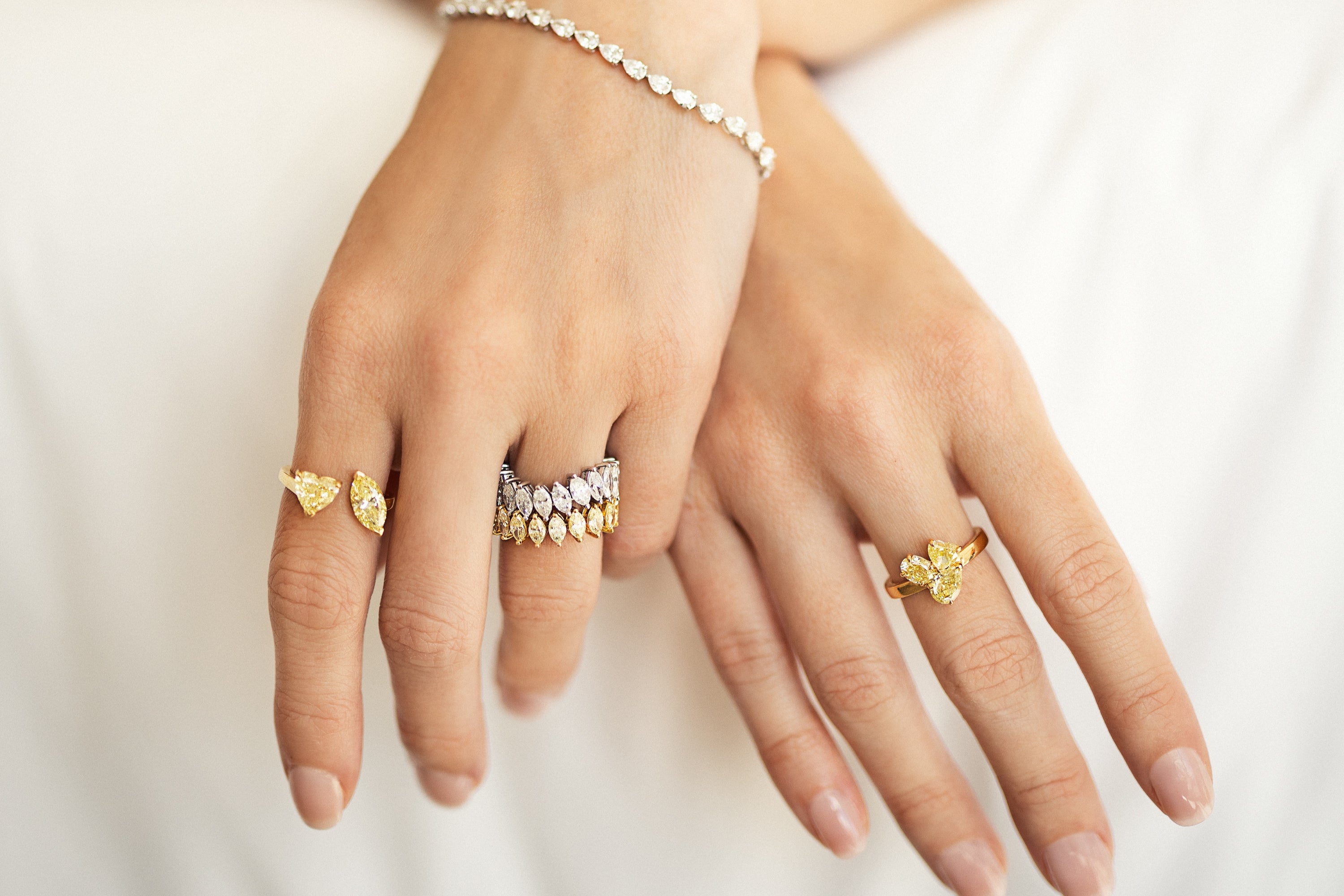
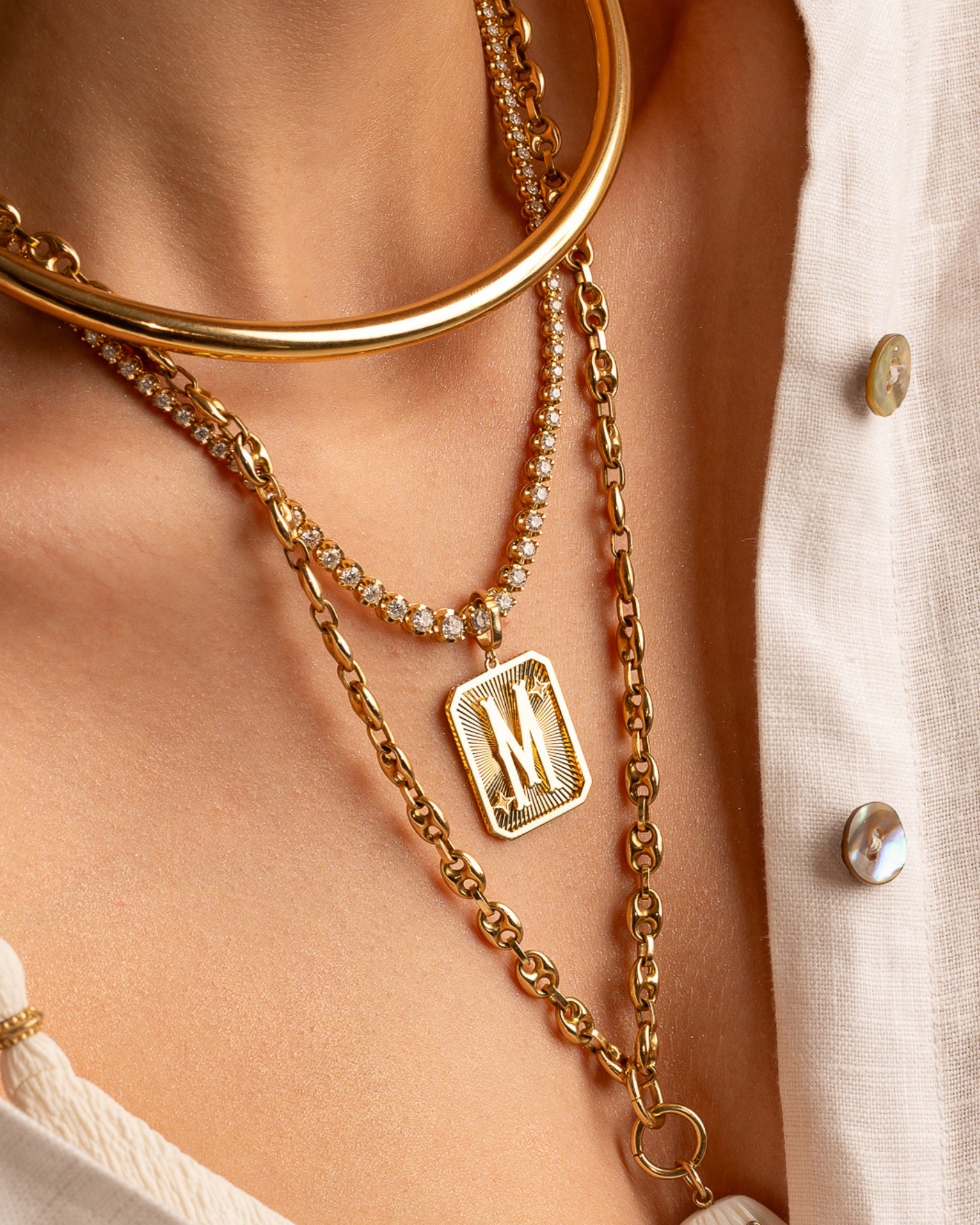
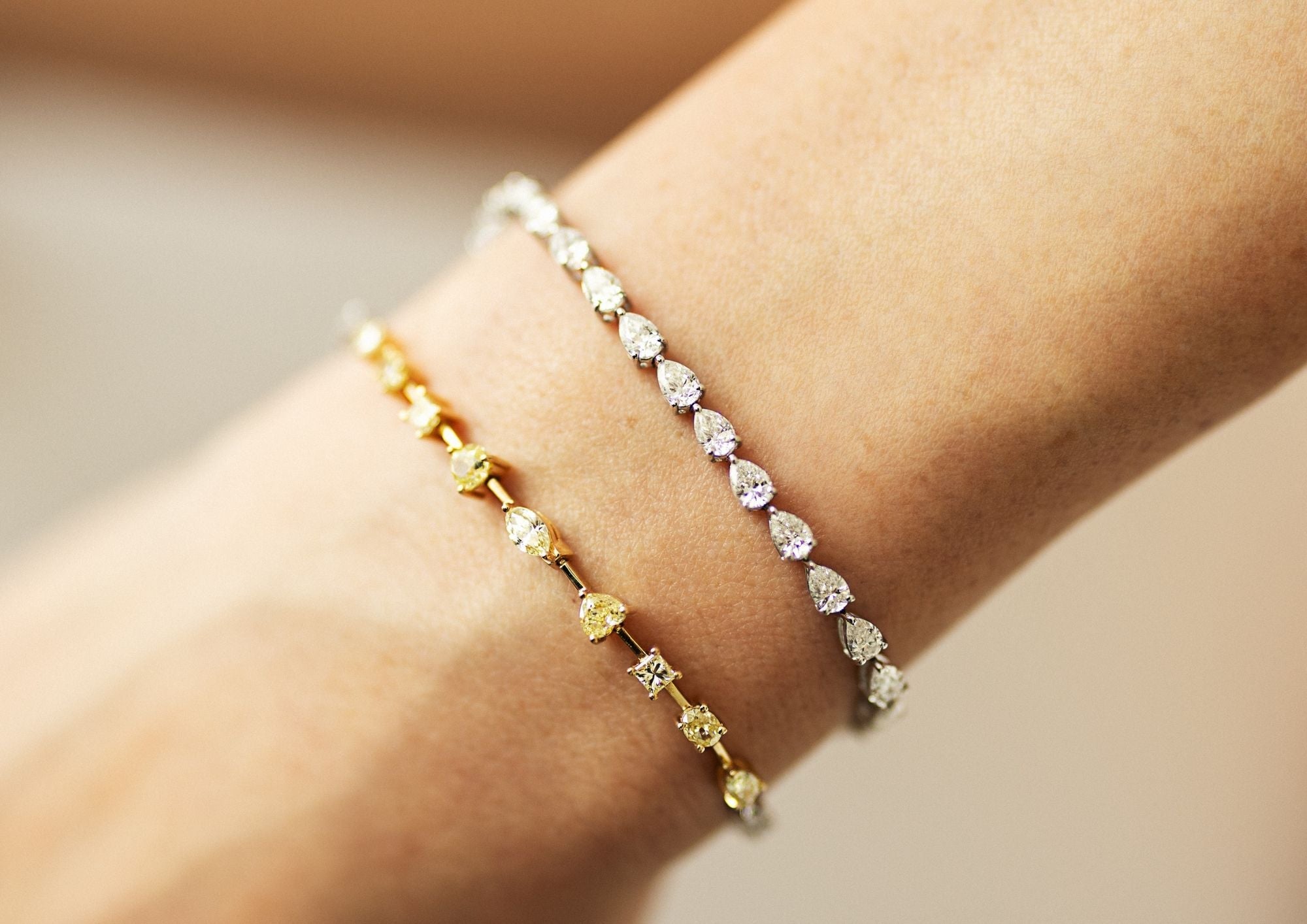
The cleanest layering rule: pair the tennis bracelet with one piece that has a different texture. A watch with a metal bracelet. A solid gold bangle. A beaded bracelet. The contrast between the diamond row and the second piece is what makes the stack read as intentional rather than accidental.
Avoid pairing two thin tennis bracelets together. They tangle and one always ends up upside down. If you want two tennis pieces, pair one diamond with one colored stone.

Try one in person
A tennis bracelet on your wrist looks different than a tennis bracelet in a photo. The drape, the weight, the way it catches light when you move your hand. Photos miss most of it.
If you are in Miami, book a private appointment and we will pull our full Tennis Edit tray. We will measure your wrist, walk you through carat weight options, and show you the difference between four-prong and bezel side by side.
If you are not in Miami, every tennis bracelet in The Tennis Edit ships with free insured 2-day delivery, full GIA certification on diamond pieces, and a 30-day return window.
The bracelet that stops a tennis match is the bracelet that survives every other moment of your life.